
Security Camera Installation
Deterrence First, Identification Second
A camera system has two jobs: keep trouble from starting, and give you usable answers when it doesn't. Visible, well-placed cameras change behavior before anything happens, and coverage that's dense and actively used shows measurable drops in property crime — but the identification half matters just as much, meaning footage clear enough to make out a face, a plate, or a package thief at any hour. Modern systems record around the clock and switch to infrared at night so footage doesn't turn into a gray blur, while two-way audio turns a passive recorder into something you can actually use from anywhere. Low Voltage Components starts with sightlines and blind spots rather than putting one camera by the door and calling it covered.
Wired Beats Wireless Past About Four Cameras
This is the first real decision, worth settling before anyone climbs a ladder. Wireless cameras are easy to mount, but they run on batteries you'll recharge every few weeks and Wi-Fi that competes with every other device in the house. Wired cameras pull power and data over a single cable — no battery cycle, no dropped frames, no gap during an outage — and they support local recorders holding weeks of footage instead of subscription-only cloud storage. Stucco and concrete construction makes wireless signal unpredictable room to room, and past four or five cameras the battery maintenance alone becomes a chore. The same logic applies to a video doorbell: constant wired power means it's never off the wall charging at the wrong moment.
Cameras Are Only as Good as the Network Behind Them
Streaming several high-resolution cameras plus a video doorbell takes real bandwidth, a properly configured router, and ideally a dedicated network segment so a firmware bug in one device can't take down the rest of the house. This is where DIY installs and production-line security jobs fall short — the cameras go up fine, then start dropping frames months later. Low Voltage Components designs the network alongside the camera system rather than as an afterthought, and sets strong credentials and correct app permissions at installation instead of leaving factory defaults in place, which remains one of the most common gaps in rushed installs.
Wired Cameras, Battery Cameras and What Each One Is Good For
A camera system is only useful at the moment something happens, which is why the specification that matters is not resolution — it is whether the camera is powered, recording, and pointed at something identifiable. Battery cameras miss events while they wake, stop recording when the battery dies in the winter, and depend on a cloud subscription to keep the footage. Wired cameras record continuously to a recorder in the house and keep working when the internet is down.
For anything you would actually want in an insurance claim or a police report, wired over Power over Ethernet is the build. One Cat6 run per camera carries power and video, so there is no separate outlet and no batteries. The recorder lives inside on a UPS. Storage is sized to the number of cameras and how long you want to keep footage — typically two to four weeks of continuous recording, which is long enough to notice something happened and go back to it.
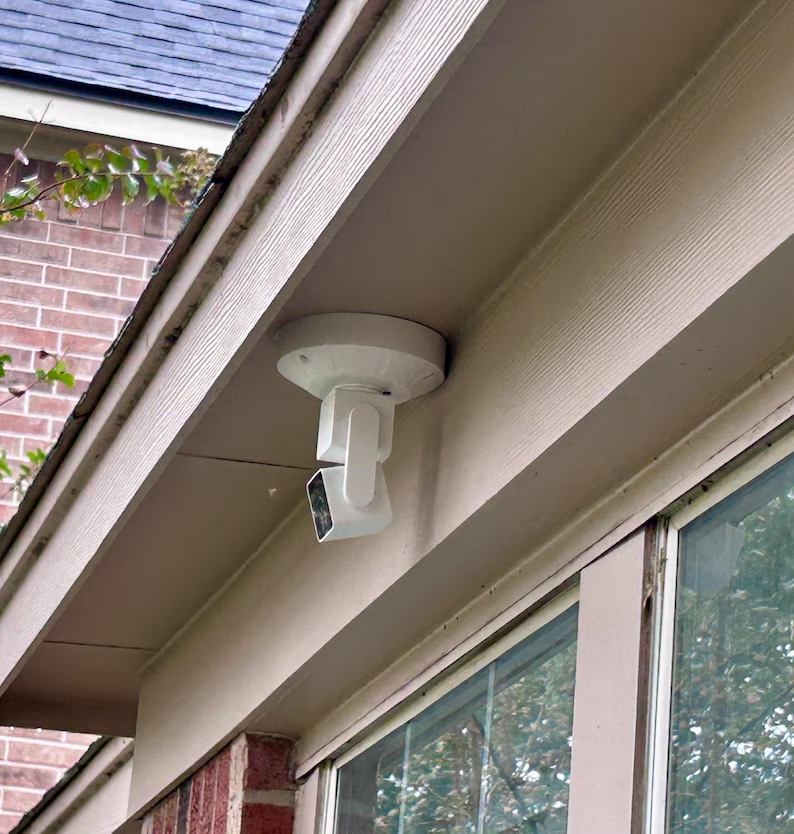
Placement decides whether footage is evidence or a grey shape. Cameras want to be eight to ten feet up: high enough to be out of reach, low enough that faces are recognisable rather than the top of a cap. Approach paths matter more than wide views, so one camera covering the walkway to the front door beats a camera showing the whole yard. Backlighting is the common mistake — a camera facing a west-facing driveway at 5pm records a silhouette, which is why we check sun angles rather than just sightlines.
Doorbells are their own decision. A wired doorbell powered from the existing transformer never needs charging and records the full approach rather than starting when motion finally triggers it; battery models suit homes with no doorbell wiring or an HOA rule against altering the entry. Where an HOA restricts exterior changes, a wired unit behind the existing chime location is usually acceptable when a new surface-mounted device is not. Camera systems sit on the home network, so we normally put them on their own VLAN to keep them off the same segment as laptops and phones.
Frequently Asked Questions
Wired or battery cameras?
Wired, wherever a cable can be run. Battery cameras are a reasonable answer for a detached shed, a rental, or a spot with no cable path — but they record on motion rather than continuously, they miss the first second or two while they wake, and they stop entirely when the battery goes. If the reason for the camera is security rather than convenience, run the cable.
Do I have to pay a monthly subscription?
Not on a wired system. Footage records to a recorder in the house, which you own, and remote viewing works from the app without a plan. Cloud storage is available as an off-site backup if you want it, but it is a choice rather than a requirement. Most subscription costs come from battery systems that have nowhere else to put the video.
How many cameras does a typical house need?
Four to eight covers most homes: front entry, driveway or garage approach, rear slider or patio, and the side gate. Adding cameras with nothing specific to watch is the most common way to overspend. We walk the property, identify the actual approach paths, and place to those.
Will cameras work if the internet goes down?
A wired system keeps recording locally — the recorder does not need the internet, only the remote app does. Battery and cloud-only cameras stop recording entirely when the connection drops, which is worth knowing before choosing between them.
Can you install cameras on a finished house?
Yes. Most retrofits run through the attic and drop down an exterior wall at the eave, which keeps cable out of sight. Two-storey homes and homes on slab with no attic above the run take longer and sometimes need a soffit or conduit path. We confirm on site before quoting.
More answers: see our full FAQ page, browse the areas we cover on the service areas page, or get in touch and we will walk you through it.
Get a Free Quote for Cameras & Video Doorbells
Tell us about the project and David will get back to you within one business day with honest next steps and a ballpark. Prefer to talk? Call (310) 702-0504.
"*" indicates required fields
Interested? Let's Talk.
Questions about your project, or ready to get started? Get in touch and we'll walk you through it.