
TV Mounting Service in San Diego
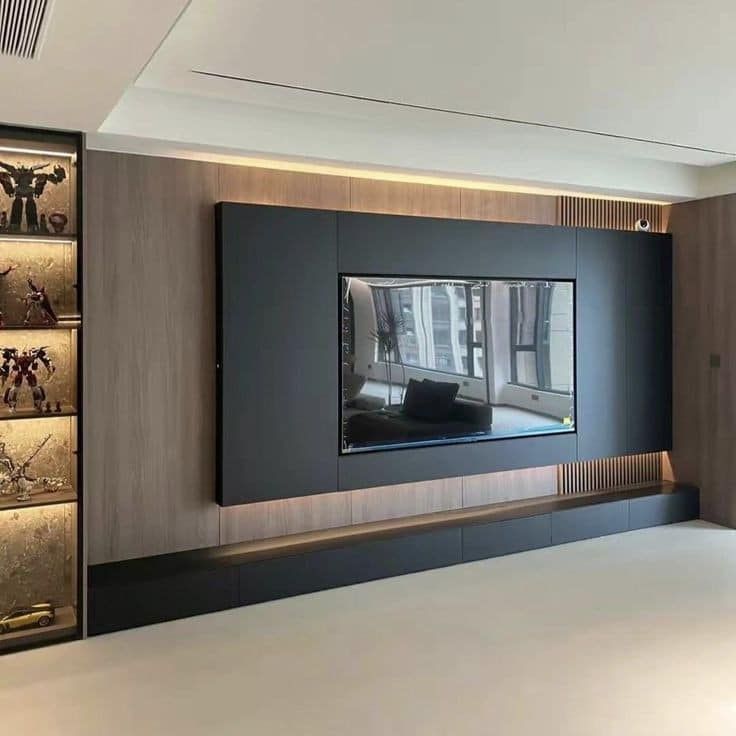
The Wall Matters More Than the Bracket
A safely mounted TV needs a bracket anchored into real framing, hardware rated for the panel's actual weight, and a cable run that doesn't cut into hidden wiring. DIY jobs fail the same handful of ways — one stud found and the second anchor point compromised, or a mount rated for the TV's weight but not its size — and none of it shows up until the panel is already hanging. Big-box "installation included" offers typically subcontract to a general handyman network, so the person on your ladder may have mounted three TVs or three hundred. Low Voltage Components carries a CLSB C-7 low-voltage license (#1056087) and treats a wall as something to verify, not guess at.
What Actually Changes the Price
Three variables drive most of the gap between a cheap mount job and a real one: wall construction, cable concealment, and mount type. Drywall over wood studs is the easy case — stucco, brick, tile, or a fireplace surround needs different anchors and sometimes a different bracket entirely, which is where a flat phone quote stops meaning much. Cable concealment is the other swing, since a surface cord channel costs less than an in-wall power kit fished down to a new outlet, but the in-wall look is the difference between "that looks done" and "that looks like a dorm room." Fixed hardware is cheapest, tilting helps above a fireplace, and full-motion earns its cost where the viewing angle changes by seat — and matching a VESA hole pattern doesn't mean the bracket is rated for the load.
The Panel and the Sound Should Match the Room
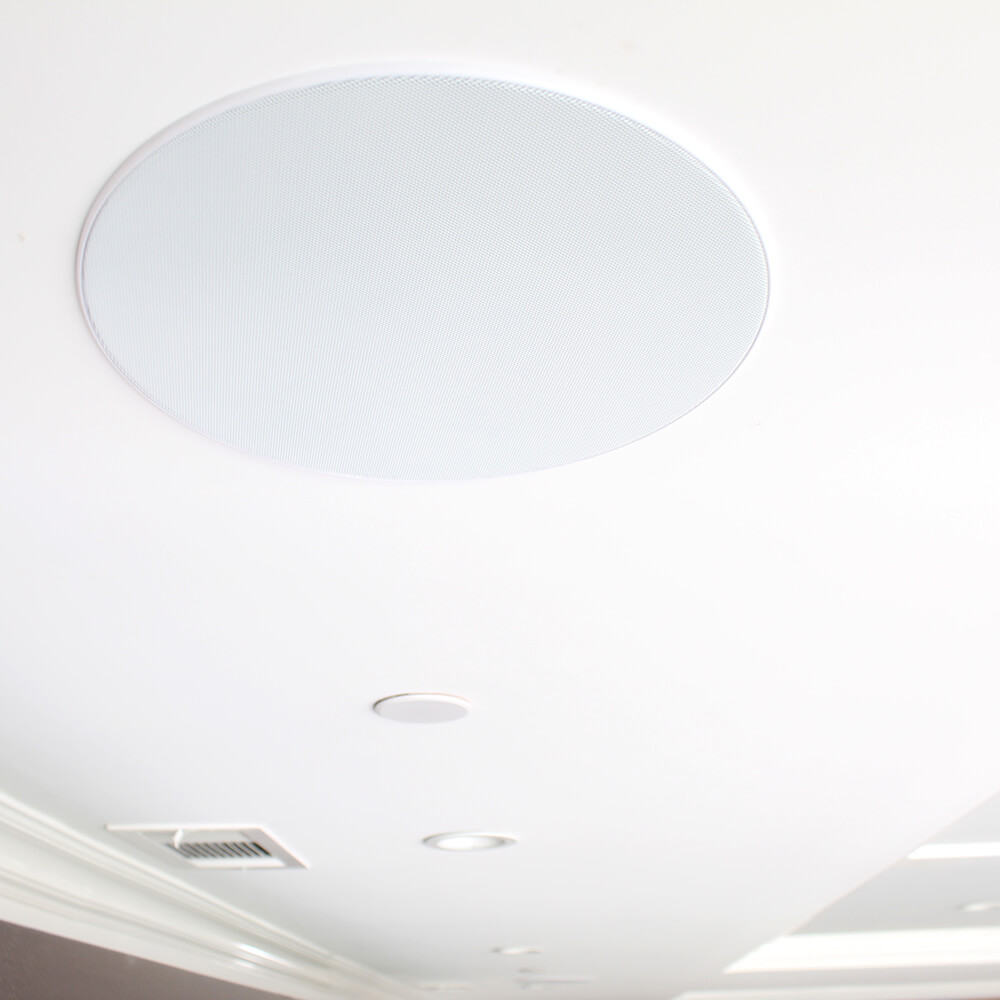
Panel technology isn't just marketing language. QLED uses a quantum-dot layer over LED backlighting for brighter, more saturated color that holds up in a sunlit North County living room, while OLED lights each pixel individually for true black levels that pay off in a darker theater room. Refresh rate is the spec that separates a screen handling fast-moving sports cleanly from one that blurs, and 4K remains the mainstream standard with 8K sitting above it at roughly 33 million pixels. Sound is usually the next question after the mount goes up, since a flat panel's built-in speakers stay thin no matter how good the picture is — which is why in-ceiling speakers and whole-home audio distribution tend to get planned in the same visit.
What a Mounted TV Job Actually Involves
Every TV mount comes down to three questions: what is behind the drywall, where the power and signal are coming from, and how the panel needs to move once it is up. Answer those before drilling and the job is straightforward. Guess at any of them and the failures are the familiar ones — a bracket carrying half its intended load because only one stud was found, a screen that cannot tilt away from an afternoon glare, or a cable run that clips a hidden circuit.
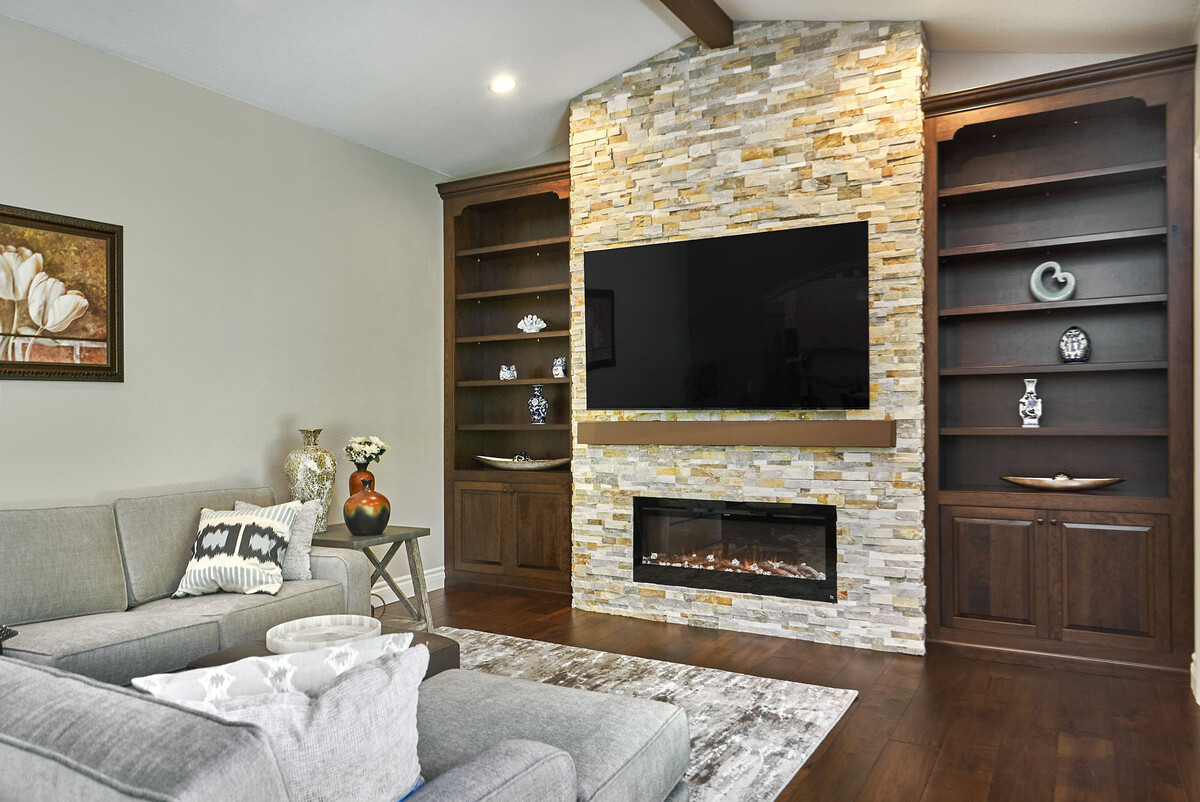
We locate framing with a scanner and confirm by pilot hole rather than trusting a stud finder on stucco or plaster. Wood studs take structural lag bolts. Metal studs need toggle hardware rated for the panel, because standard lags will pull straight through. Brick, block and stone take masonry anchors set into the unit, not the mortar joint. A fireplace surround usually needs a different bracket than the one that came in the box, because the mount has to carry the panel out past a mantel and still sit at a sane viewing height.
Cable concealment is what separates a finished job from a screen with a cord hanging down. In an open drywall cavity we fish power and HDMI inside the wall and terminate into a recessed outlet behind the panel — one small opening behind the screen, one near the receptacle, both hidden. Over a firebox, above a masonry chimney breast, or on any wall we cannot open, we use a low-profile surface raceway painted to match. We tell you which of those applies before we start, not after.
Mount type follows the seating. A flush mount is right when the seats are square to the wall at roughly screen height. A tilting mount buys back a high install above a mantel. A full-motion arm earns its cost in open-plan rooms where the screen has to serve a kitchen island and a sofa, and in any room where the back of the TV needs to be reachable. Over-fireplace installs get a heat check — a mantel shelf and a deflector keep panel temperatures inside spec, and where they cannot, we will say the wall is a better location.
Frequently Asked Questions
Can you mount a TV over a fireplace?
Usually, with two conditions. The mount has to bring the screen out past the mantel and tilt down so you are not craning your neck, and the panel has to stay within its rated temperature — a mantel shelf and a heat deflector normally handle a gas firebox. On a hard-working wood-burning fireplace with no mantel we will tell you the adjacent wall is the better call rather than take the job and hope.
Can you hide the wires without opening up my wall?
In a standard drywall cavity, yes — one small opening behind the screen and one near the outlet, both covered by plates. On masonry, over a firebox, or on a wall with fire blocking we cannot get past, a slim raceway painted to match the wall is the honest answer and it looks far better than a visible cord.
What about the soundbar, streaming boxes and the cable box?
They get planned into the same run. Devices can live in a cabinet below with an HDMI and an IR or RF repeater to the panel, or on a shelf behind the screen. We set the whole chain up, program one remote for it, and label what plugs in where so it can be sorted out later without a call.
Do you mount TVs outdoors?
Yes, with weather-rated panels and mounts. A standard indoor TV in a covered patio fails on humidity, insects and temperature swings long before it fails on rain, and its warranty will not cover it. Outdoor-rated screens plus a stainless mount and a proper covered enclosure is the setup that lasts. We will also run the speaker and network cable while we are there.
How high should the TV go?
Centre of the screen at seated eye level, which for most sofas is 40 to 45 inches off the floor. That is lower than most people expect and lower than most showroom displays. Where a mantel or a piece of furniture forces the panel higher, a tilting mount recovers most of the viewing angle.
More answers: see our full FAQ page, browse the areas we cover on the service areas page, or get in touch and we will walk you through it.
Get a Free Quote for TV Mounting
Tell us about the project and David will get back to you within one business day with honest next steps and a ballpark. Prefer to talk? Call (310) 702-0504.
"*" indicates required fields
Interested? Let's Talk.
Questions about your project, or ready to get started? Get in touch and we'll walk you through it.