Home Automation Installation in San Diego
One System, Installed and Programmed by One Company
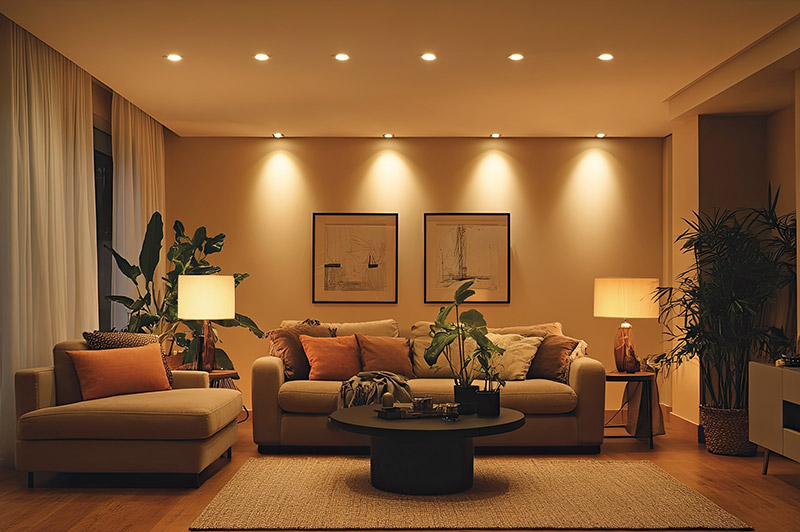
A home automation installation ties your lighting, shades, climate, security and entertainment into a single system, so you're not switching between six apps to lock a door or dim a room. Low Voltage Components designs, wires and programs these systems for homes and businesses from San Diego to Los Angeles, working under a California C-7 low-voltage license (#1056087). Every project starts with a walk-through — what rooms, what systems, what's already there — because a one-room lighting setup is a very different project than a whole-house system, and you deserve a straight answer on cost and timeline before any wire gets pulled.
Built on a Network That Holds Up
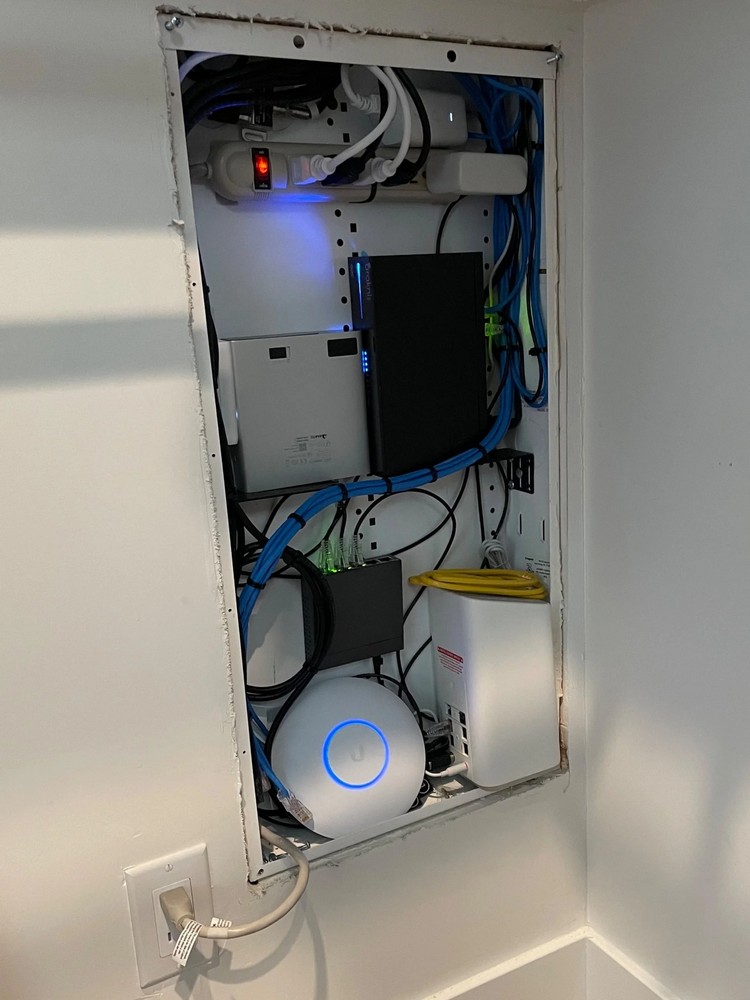
The network is where most smart homes quietly fail. Wi-Fi dead zones, or a single access point covering two stories, will make lighting scenes lag and cameras drop — which is why Low Voltage Components designs the network alongside the automation itself, and why homes with thick stucco walls or detached casitas almost always need more than one access point. Security runs on that same backbone rather than a separate app, so one "away" scene locks the doors, drops the shades and turns on exterior lighting instead of three steps done by hand.
Wired In From the Framing
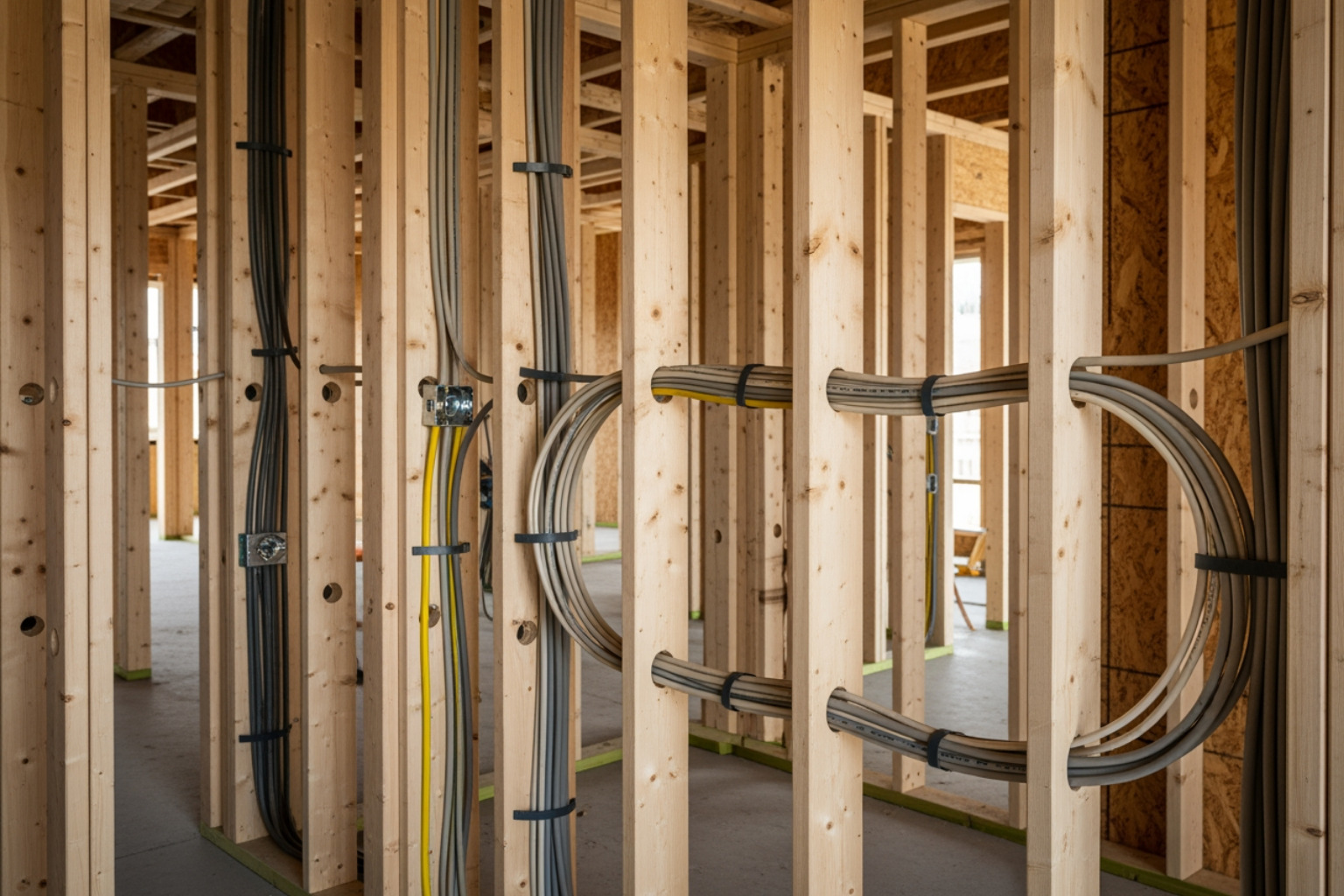
Unused cable run during framing costs a fraction of opening a wall later to add it, so Low Voltage Components works alongside builders during new construction to run Ethernet, speaker wire and conduit to rooms that will need it years from now — including features you may not add until long after move-in. Retrofits in finished homes follow the same principle in reverse: map what the walls will allow before anything gets committed, then wire it properly and program it to do what you expect without a manual.
Automation That Gets Used, and Automation That Gets Switched Off
The failure mode of home automation is not that it stops working — it is that the household stops using it. Systems get abandoned when the wall switch no longer does the obvious thing, when a guest cannot turn on a light, or when every action needs a phone. A system that survives keeps every physical control working the way a person expects, and adds automation on top of that rather than in place of it.
So the design rule we work to is simple: the switch on the wall always works, and always does the most likely thing. Automation handles the repetitive stuff nobody wants to think about — outside lights following sunset rather than a fixed clock time, shades dropping on a west elevation in the afternoon, the house dropping to an away state when the alarm arms, a single button by the bed that shuts the ground floor down. Scenes get named for what they do, not for the equipment they touch.
Platform choice matters less than most product pages suggest, and the honest ranking is: what the household already uses, then what the house can support, then brand. We install and program Control4, Lutron, Josh.ai, Ring, Sonos and the mainstream Apple, Google and Amazon ecosystems, and we are not tied to any of them. What matters more is that lighting loads, shade motors and keypad locations are decided before drywall, because those are the parts that are expensive to change afterwards.
Reliability comes from the layer underneath. Automation that depends on a cloud service reacts slowly and stops entirely when the internet does; local processing keeps scenes and schedules running through an outage. Controllers, hubs and processors get static addresses and their own network segment so a firmware update on a television does not knock a lighting scene offline. That is a network design question as much as an automation one, and it is the usual reason a system that worked at handover stops working six months later.
Frequently Asked Questions
Do I need Control4, or will Apple Home and Alexa do?
For lighting scenes, a handful of smart plugs and voice control, the mainstream ecosystems are genuinely fine and much cheaper. A dedicated processor earns its place when you are tying together lighting, shades, audio, video, HVAC and security into scenes that have to fire reliably every time, and when you want a keypad on the wall rather than a phone. We will tell you which side of that line a project sits on before you spend.
What happens when the internet goes down?
On a properly specified system, scenes, schedules, keypads and wall switches keep working, because the processing is local. What you lose is remote access from outside the house and any voice assistant that routes through the cloud. Systems built entirely on cloud services lose everything, which is the main practical argument for local processing.
Can automation be added to a house that is already finished?
Much of it, yes. Smart switches, shades, locks, thermostats, cameras and audio all retrofit. What is hard after drywall is centralised lighting control, keypad locations in new spots, and motorised shade power at every window — those are the pre-wire items. We work out what is realistic in your house rather than quoting an ideal system that needs the walls open.
Will guests and family be able to use it?
That is the test we design to. Every wall switch keeps working, keypads are engraved for what they do, and there is no scenario where the only way to turn on a light is an app. If a system needs a household briefing, it has been designed badly.
Are you an authorised Control4 or Lutron dealer?
We install and program both, and we are straight about the distinction: we are not making an authorised-dealer claim. What you get is a licensed C7 contractor who wires, installs, programs and supports the system, and who will tell you when a cheaper platform does the job you actually described.
More answers: see our full FAQ page, browse the areas we cover on the service areas page, or get in touch and we will walk you through it.
Get a Free Quote for Home Automation
Tell us about the project and David will get back to you within one business day with honest next steps and a ballpark. Prefer to talk? Call (310) 702-0504.
"*" indicates required fields
Interested? Let's Talk.
Questions about your project, or ready to get started? Get in touch and we'll walk you through it.